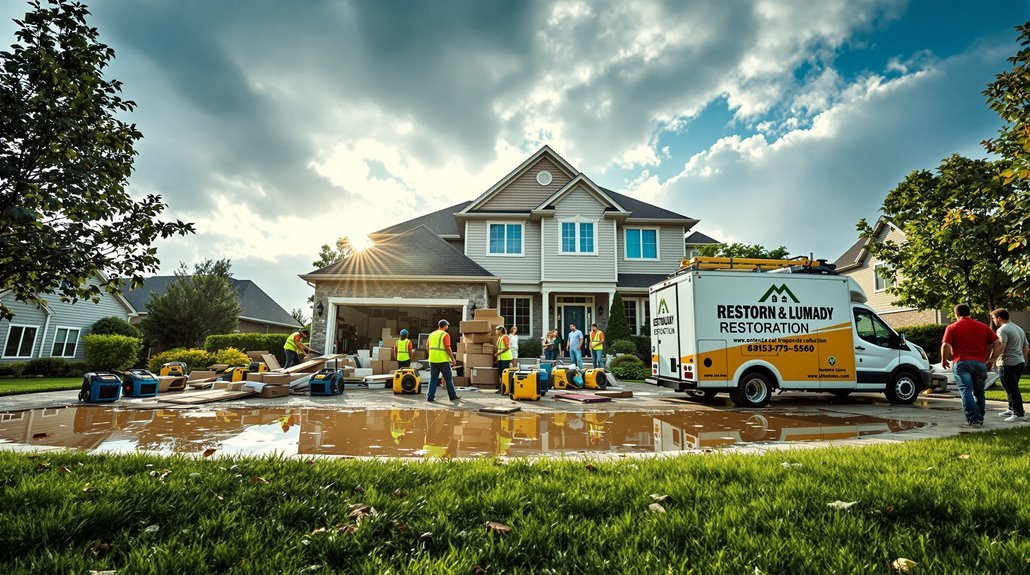
When flood damage strikes your Locust Grove home, you’ll need to act quickly. First, categorize your water source—clean, gray, or black—to determine remediation methods. Next, you’ll extract standing water using professional-grade pumps and vacuums. Then, deploy dehumidifiers to dry all flooring thoroughly and prevent mold growth. After sanitizing surfaces with approved antimicrobial solutions, schedule a follow-up inspection to verify moisture levels and structural integrity. Understanding each step’s critical details will help you protect your property effectively.
Key Takeaways
- Assess and categorize water damage by source—clean, gray, or black—to determine proper remediation methods for your Locust Grove home.
- Remove standing water quickly using professional pumps and vacuums to minimize structural damage and prevent long-term complications.
- Deploy dehumidifiers and increase ventilation to dry flooring completely, monitoring humidity levels to prevent mold growth effectively.
- Sanitize all affected surfaces with approved antimicrobial solutions following safety guidelines to eliminate bacteria and prevent contamination.
- Schedule professional follow-up inspections to verify moisture removal and confirm structural integrity before considering restoration complete.
Assess water category 2. Extract standing water 3. Dry flooring 4. Sanitize surfaces 5. Schedule follow-up inspection
Once you’ve documented the initial damage, you’ll need to categorize the water source to determine appropriate remediation methods. In Locust Grove, GA, flood damage typically falls into three categories: clean water, gray water, or black water. Each requires different handling protocols.
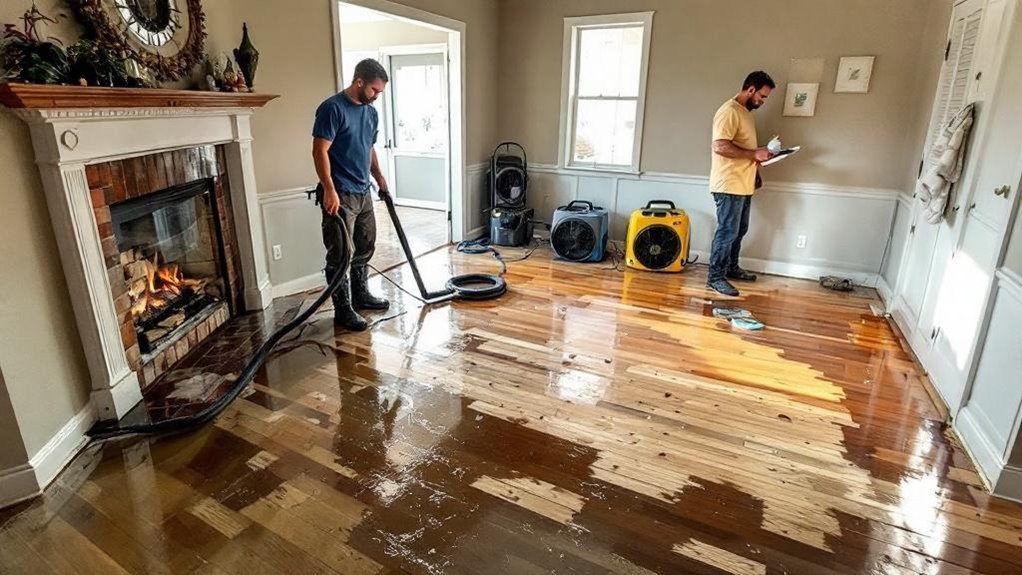
Next, you’ll extract standing water using professional-grade equipment. Rapid water removal locust grove specialists employ pumps and vacuums to eliminate pooled water efficiently. Simultaneously, you’ll begin drying flooring by increasing ventilation and deploying dehumidifiers.
Following extraction, you’ll sanitize all affected surfaces with approved antimicrobial solutions. This critical step prevents mold and bacterial growth. Your flood cleanup locust grove process concludes with scheduling a follow-up inspection to verify moisture levels and assess structural integrity, ensuring thorough restoration and preventing long-term complications.
Professional restoration services utilize industrial-grade dehumidification tools to eliminate residual moisture and prevent secondary damage to your property.
Conclusion
You’ll restore your Locust Grove home effectively by following these five sequential steps: evaluating water category, extracting standing water, drying flooring, sanitizing surfaces, and scheduling follow-up inspection. A homeowner who’d delayed water extraction for 48 hours found Category 2 contamination had already penetrated subflooring, requiring complete structural replacement versus simple surface remediation. You can’t afford similar delays—each hour increases mold proliferation and structural compromise, escalating restoration costs exponentially.