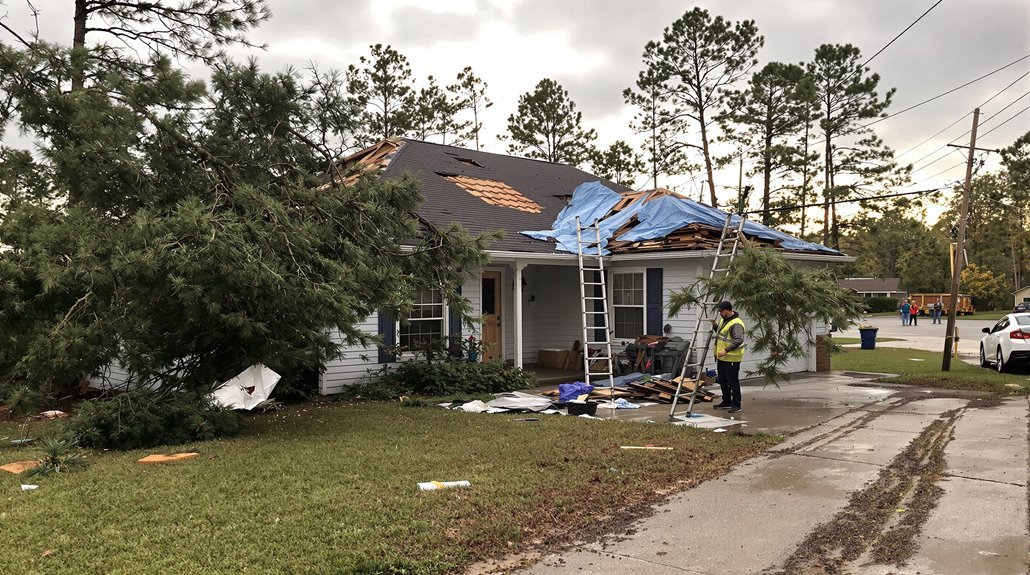
After a Fayetteville storm, you’ll need to inspect your roof and gutters within 24 hours for missing shingles and debris blockages. Clear your yard of storm debris immediately to prevent secondary damage and identify additional concerns. Contact certified restoration professionals who understand local building codes and weather patterns. Start drying interiors with fans and dehumidifiers right away—you’ve got 24-48 hours before mold takes hold. Acting quickly on these steps protects your home and strengthens your insurance claim.
Key Takeaways
- Inspect your roof and gutters for damage, documenting findings with photos for insurance claims.
- Clear debris from your yard and exterior promptly to prevent secondary property damage.
- Begin drying interiors with fans and dehumidifiers within 24-48 hours to prevent mold growth.
- Contact certified restoration professionals to assess hidden damage and ensure proper repairs.
- Monitor humidity levels and inspect moisture-prone areas regularly for early mold detection.
Inspect roof and gutters 2. Remove debris 3. Call certified restoration pros 4. Dry interiors 5. Prevent mold
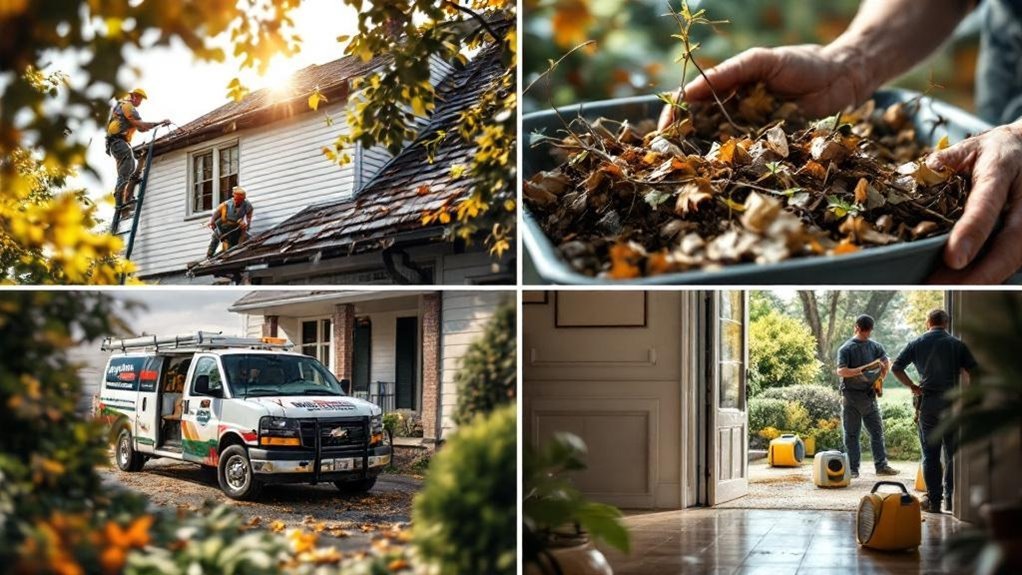
After a storm passes through Fayetteville, GA, you’ll want to inspect your roof and gutters first—they’re your home’s first line of defense against water damage. Check for missing shingles, cracks, and debris accumulation that can trap water. Clear gutters and downspouts thoroughly to guarantee proper drainage.
Next, remove debris from your yard and property’s exterior. This prevents secondary damage and identifies additional storm damage repair Fayetteville needs. Document everything with photos for insurance purposes.
For roof leak water damage Fayetteville homeowners experience, don’t attempt repairs yourself. Call certified restoration professionals who understand local building codes and weather patterns. They’ll assess hidden damage you might miss.
While professionals work, begin drying interiors with fans and dehumidifiers. Storm cleanup Fayetteville GA requires swift action to prevent mold growth, which thrives in moisture within 24-48 hours. Professional teams utilize high-powered pumps and vacuums to extract standing water that household equipment cannot handle effectively.
Conclusion
You’ve now navigated the storm’s aftermath—from inspecting torn roofing to watching water drain from your foundation. You’ll systematically address each damage layer, calling professionals when structural concerns emerge. You’re committed to drying every corner before mold creeps into walls. With documentation complete and insurance contacted, you’re positioned to rebuild methodically. Your home’s resilience depends on the decisive action you’re taking today.